Resistive Touch Screens
Capacitive gets the attention, but resistive still wins in specific cases — thick gloves, styli, heavy contamination, and cost-driven designs. Where the line actually falls.
Read more →Technical Writing
Written for the people who actually specify this hardware. How the technologies work, where each one fits, and the trade-offs that don't show up on a datasheet.
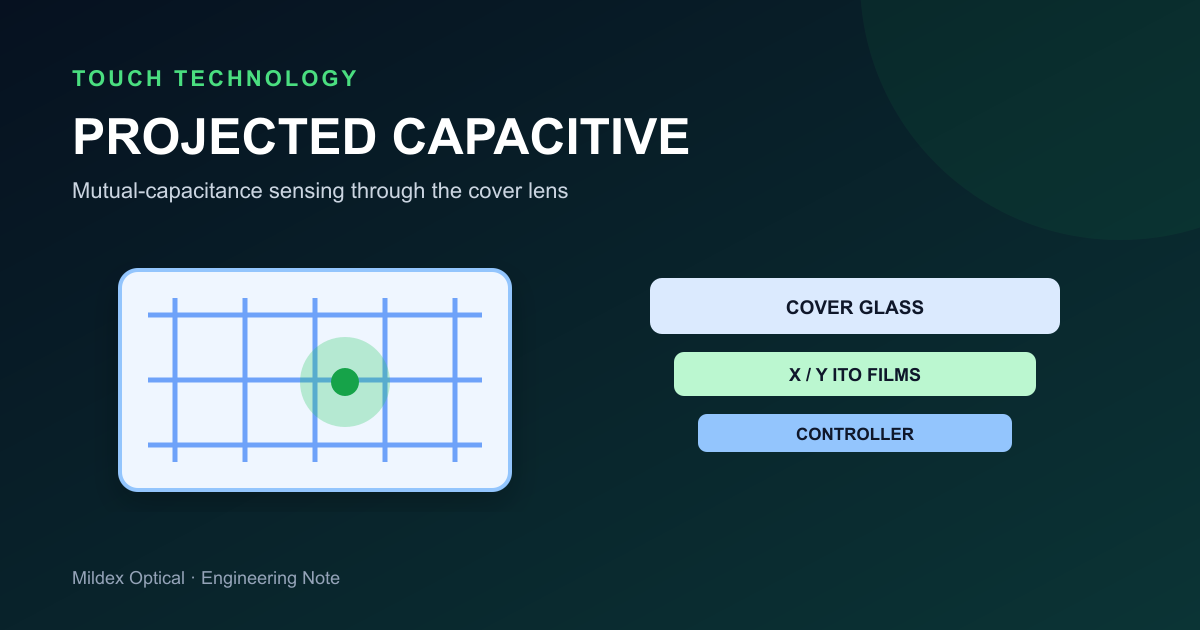
Projected capacitive is the default choice for modern HMIs — until it isn't. How PCAP sensing actually works, why controller tuning matters more than the sensor itself, and what separates a field-ready module from a repackaged consumer part.
Read the article →Capacitive gets the attention, but resistive still wins in specific cases — thick gloves, styli, heavy contamination, and cost-driven designs. Where the line actually falls.
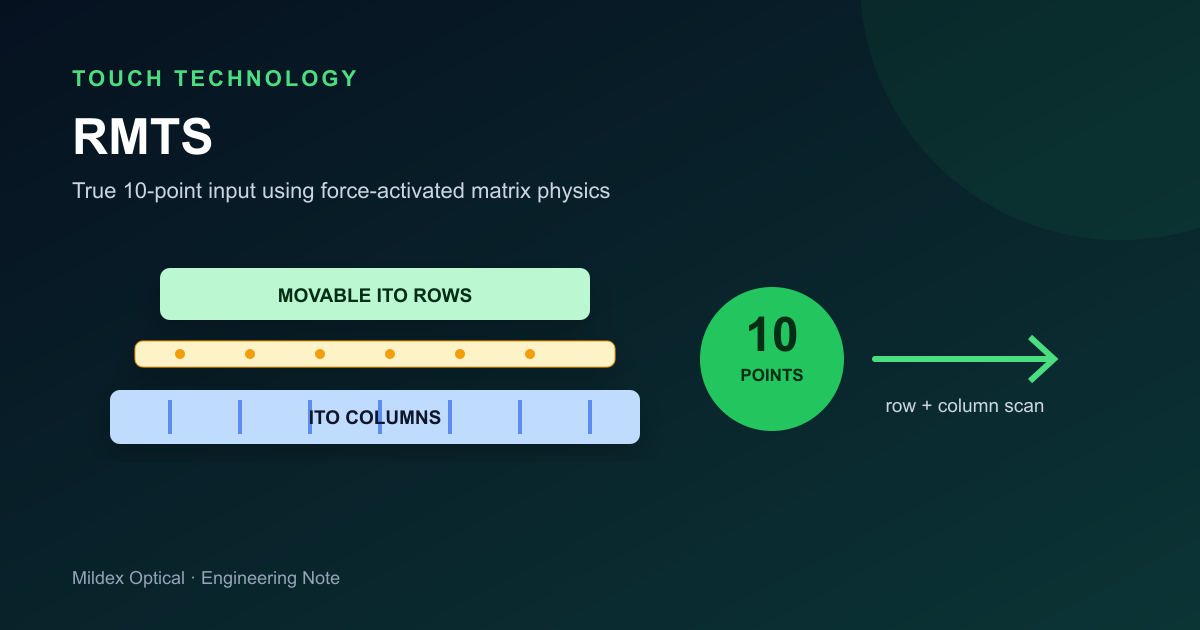
Read more →You don't always have to choose between glove operation and pinch-zoom. How Resistive Multi-Touch Systems bridge the gap for rugged HMIs that need a modern interaction model.
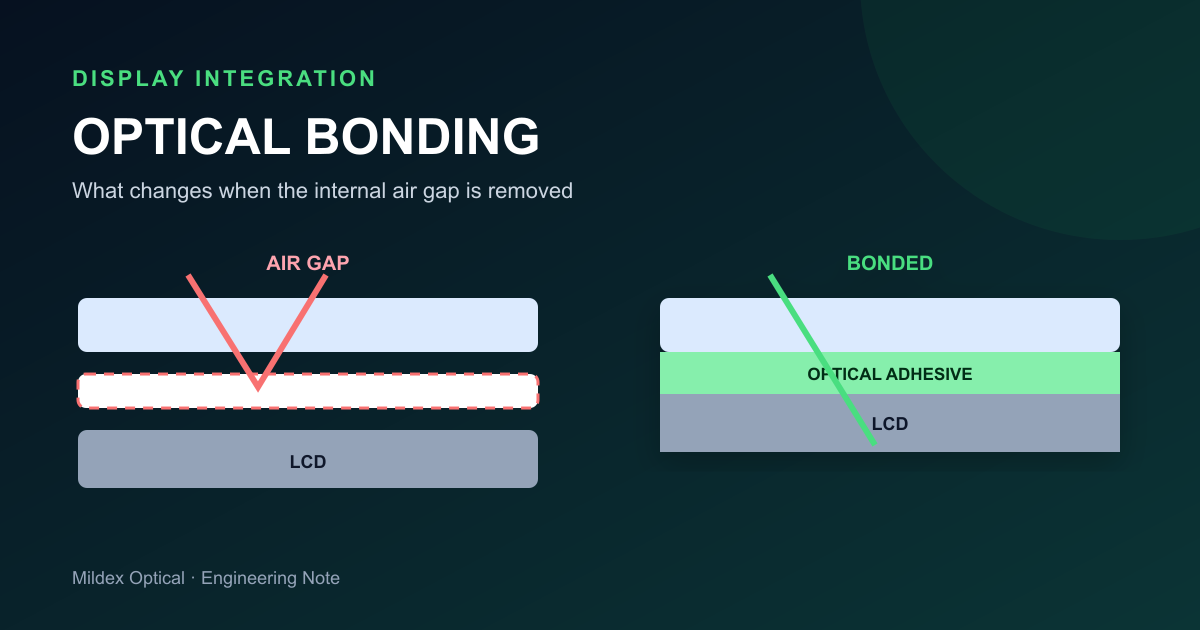
Read more →Removing the air gap does four things at once: raises ambient contrast, improves impact resistance, stops internal condensation, and reduces parallax. Why it's rarely optional outdoors.
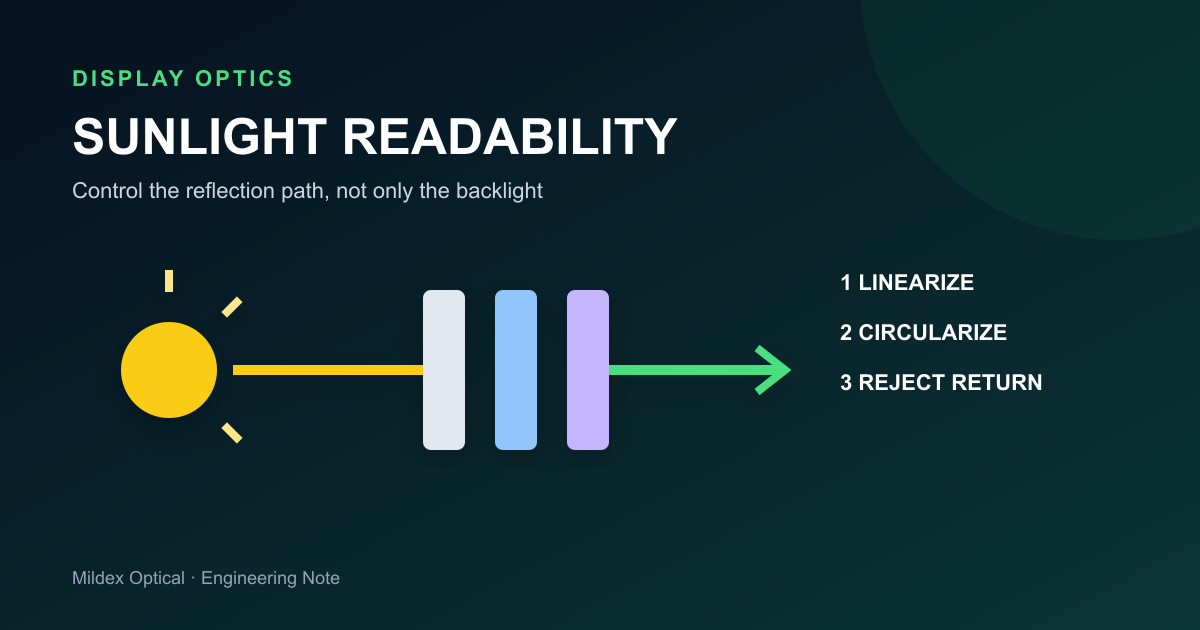
Read more →Chasing nits is the expensive way to solve a reflection problem. Why ambient contrast ratio — not raw brightness — determines whether an operator can read the screen at noon.
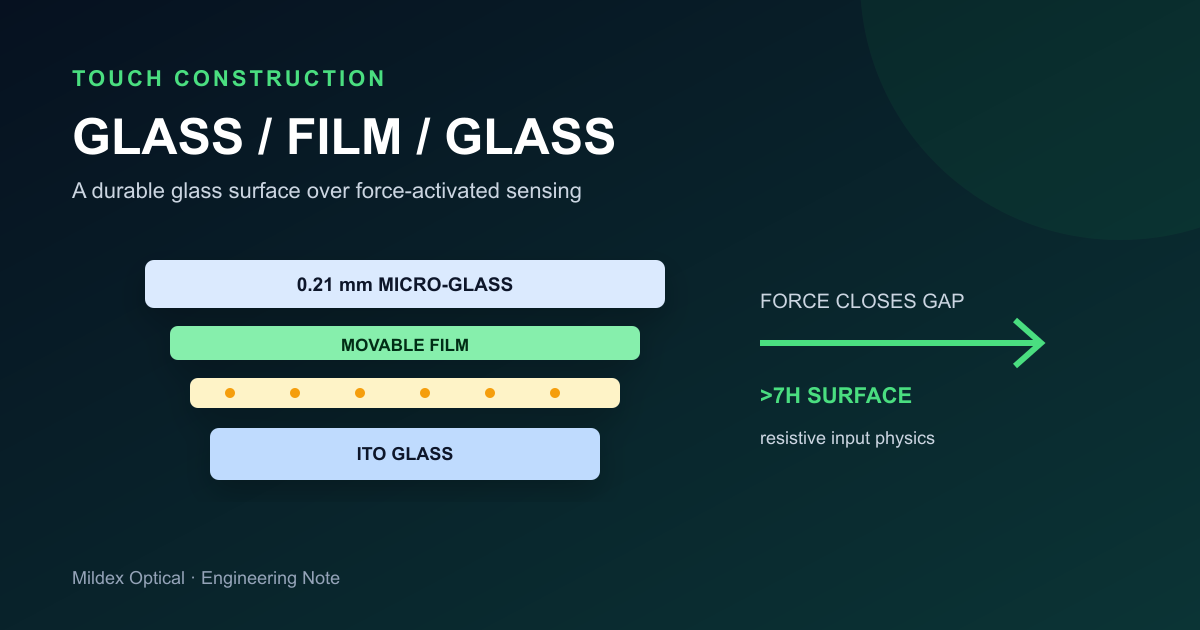
Read more →GFG sits between film-based economy and full glass-glass rigidity. What the sandwich buys you in optical clarity, durability, and manufacturing flexibility.
Read more →Send it to our engineering team. If it's a good one, we'll probably turn the answer into the next article.
Ask an Engineer →